


The S&P 500 recently surpassed 7,500 for the first time, marking another milestone in a year that has seen many new all-time highs. This is positive for investors, especially because several sectors have contributed to this rally. These trends have also fueled enthusiasm for IPOs, particularly ones related to artificial intelligence, after years of relatively few companies going public.
This is occurring despite ongoing concerns over inflation, high oil prices, and hopes for a peace deal in Iran that has not yet materialized. In contrast to the stock market, these challenges have weighed on the bond market, pushing long-term interest rates higher. The 30-year U.S. Treasury yield, for instance, briefly reached a nearly 20-year high before settling back toward 5%. Since headlines like these can create uncertainty for markets, maintaining perspective and balance are more important than ever.
Technology stocks continue to support market performance
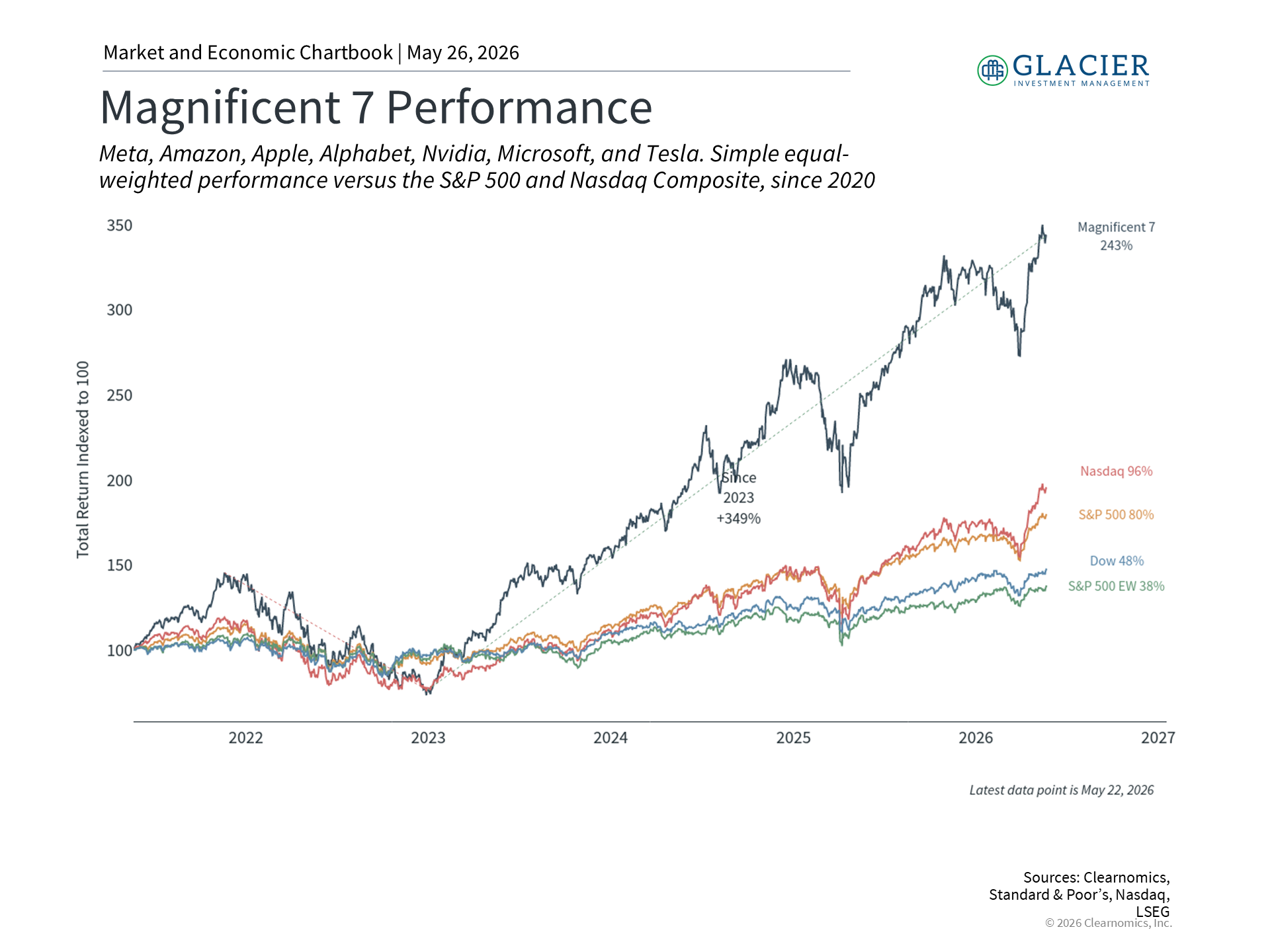
While the energy sector continues to lead the market, technology-related stocks have also contributed to portfolio returns this year. The Magnificent 7, which includes Apple, Microsoft, Nvidia, Amazon, Alphabet, Meta, and Tesla, now represents about 35% of the S&P 500. This emphasizes the importance of portfolio construction, since some investors may not realize how much exposure they may have to these individual companies today.
What has supported the market rally is not just positive sentiment, but also strong fundamentals. S&P 500 earnings growth has been running well above its historical average, and many of these large companies have continued to deliver positive earnings surprises. Current consensus earnings estimates suggest that the Information Technology and Communication Services sectors could grow earnings by 35.8% and 17.3%, respectively, over the next year.1 Other sectors, including Materials and Energy, are expected to experience above-average growth as well.
That said, valuations have also climbed alongside prices. The S&P 500 forward price-to-earnings ratio currently sits near 21x, above the historical average of 16x. Technology stocks specifically trade at a forward P/E around 24x.2 While elevated valuations do not predict short-term market moves, they are an important consideration for long-term investors thinking about asset allocation. Maintaining balance across sectors, sizes, and styles can help manage risk while also benefiting from market trends.
IPO activity is returning to public markets
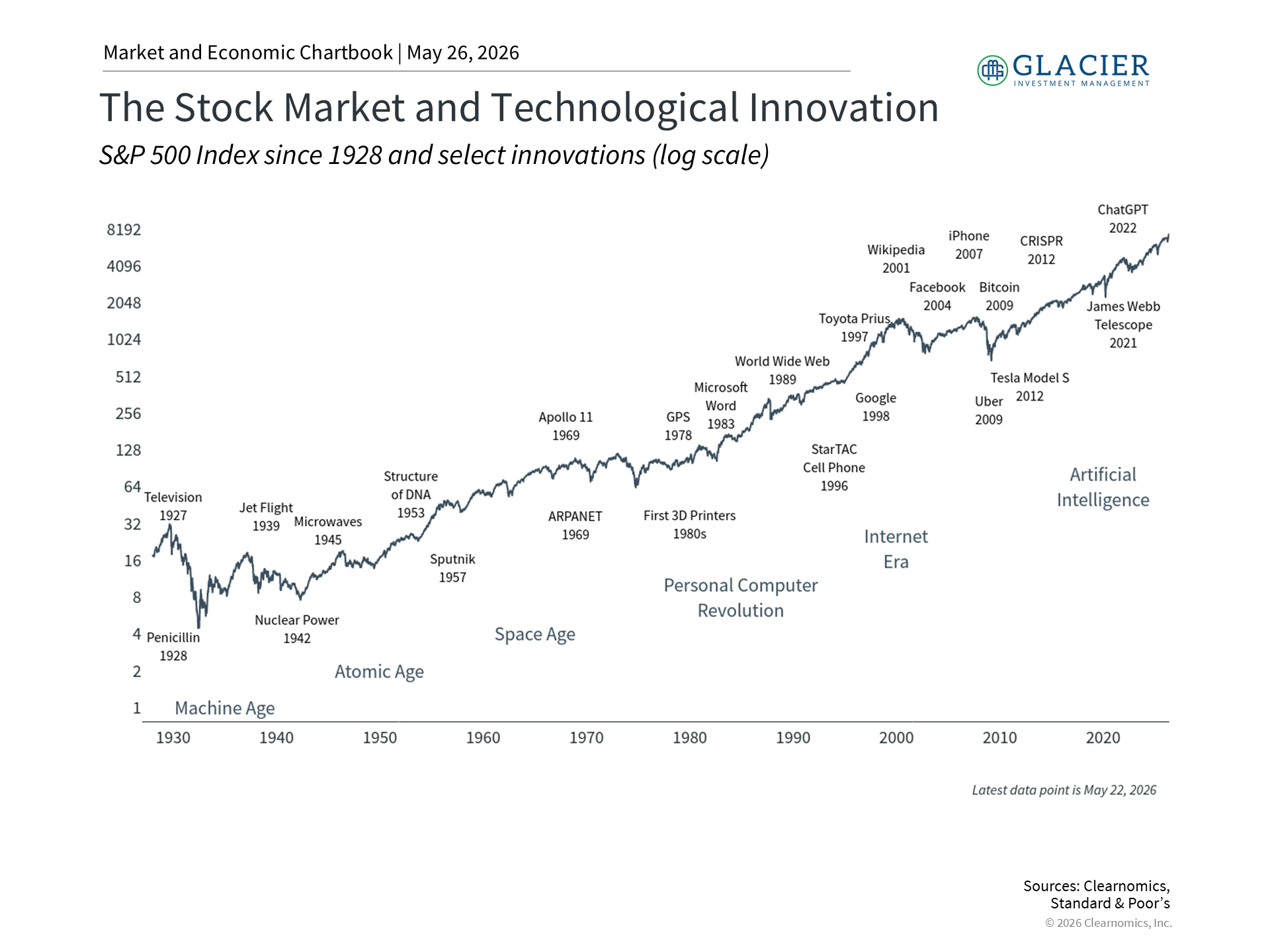
The stock market is constantly evolving, since existing companies can be acquired, merged with others, or in some cases fail. At the same time, new companies can join major exchanges through a process known as an initial public offering, or IPO.
This is one reason why the opportunity set available to investors today looks different than it did even a decade ago. For example, while the FT Wilshire 5000 was originally designed to include roughly 5,000 publicly traded U.S. companies, today it contains only about 3,400 components.3 This reflects a long-term trend of companies staying private for longer.
Recently, headlines have focused on a number of high-profile companies that are reportedly considering public offerings, including SpaceX, Anthropic, OpenAI, and others.4 Many of these are large businesses that have grown primarily through venture capital and private investment rather than public markets. From that perspective, these potential IPOs are positive because they make shares of these companies available to a broader set of investors. Stock market indices automatically incorporate new public companies as they grow, meaning that long-term investors gain exposure to successful IPOs over time without needing to invest in them directly at the time of offering.
Of course, what captures the attention of many investors are the headlines and excitement surrounding IPOs. For some, it is natural to wonder whether participating in an IPO is an opportunity for early gains. However, this is not always the case. For instance, it’s often the institutional investors and company insiders that truly participate in the IPO itself, and many have often been invested for years before the public offering. Additionally, these company insiders are often subject to lock-up periods, commonly 180 days, during which they cannot sell their shares. When these periods expire, additional selling pressure can weigh on the stock price, sometimes catching investors by surprise.
IPO activity tends to come in waves, often occurring during strong economic periods when investment capital is plentiful and market enthusiasm is high. The dot-com boom of the late 1990s is perhaps the most famous example, but there are many other periods as well. For example, the post-pandemic market recovery experienced a jump in Special Purpose Acquisition Company (SPAC) activity, which is one way some companies can go public. This wave was relatively short-lived, demonstrating the importance of maintaining a longer-term perspective.
Long-term interest rates have remained elevated
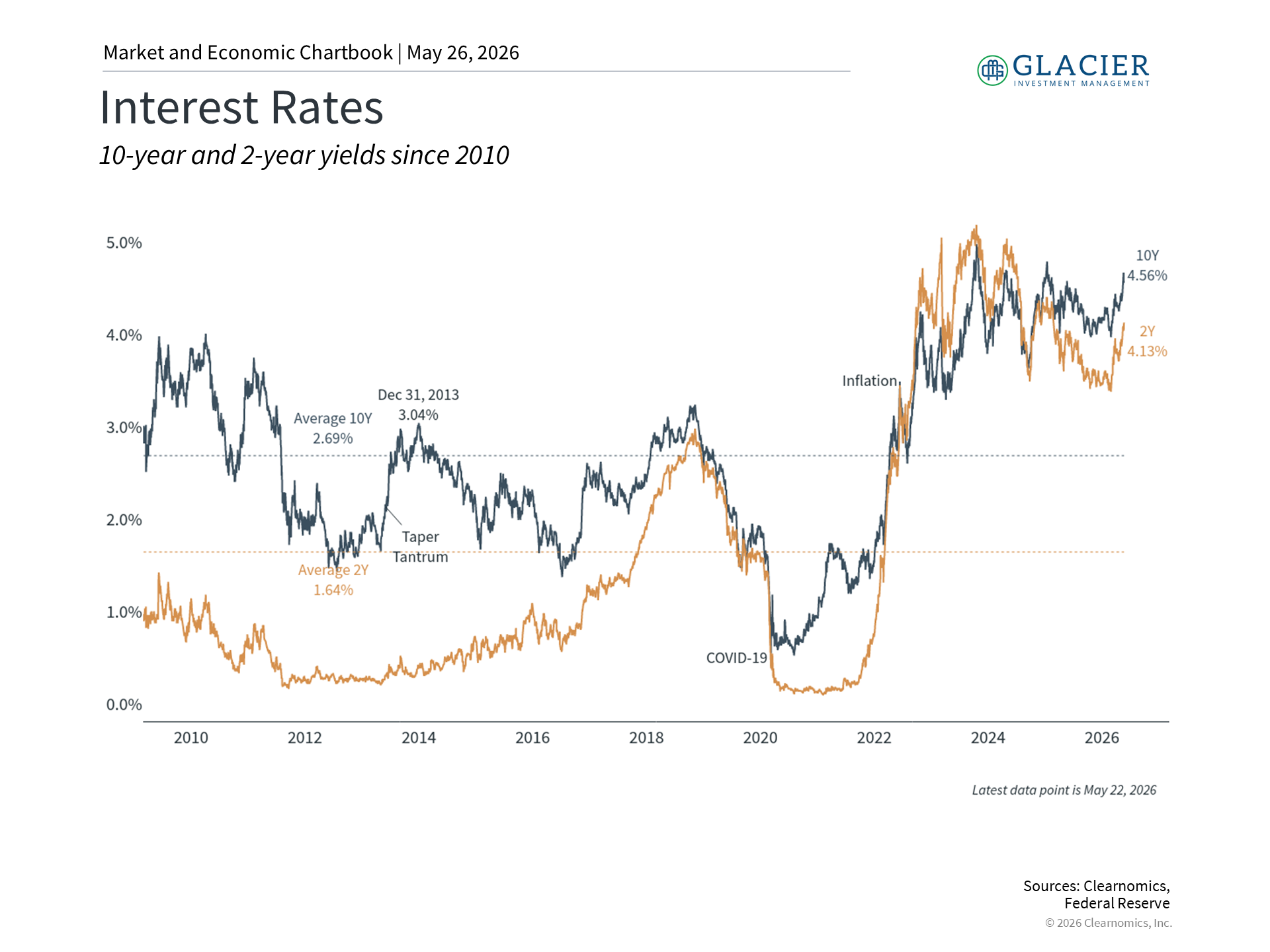
While the stock market has been climbing to new highs, long-term interest rates have also been rising. This is primarily due to inflation concerns, complicating the path of Fed policy over the next year. Technology stocks are typically sensitive to interest rates and inflation since they affect the value of their future cash flows. This is one reason these stocks struggled in 2022 as interest rates spiked, and then performed well as inflation moderated in the years since.
Beyond the technology sector, higher interest rates have implications across the economy and markets. Mortgage rates have moved up, with the 30-year fixed rate now around 6.5%, above the long-term average of 6.02% since 1990. This affects housing affordability and broader real estate activity. Higher rates also influence the cost of capital for businesses and the discount rate applied to future earnings, which can affect stock valuations, particularly for growth-oriented companies whose value depends heavily on future cash flows.
At the same time, higher interest rates mean that bonds are now offering more meaningful income than they have in many years. Investment grade corporate bonds yield 5.3%, compared to a long-term average of 3.8%. Treasurys yield 4.4%, well above their historical average of 2.2%.5 For investors, this creates more attractive opportunities in fixed income, which can play a more meaningful role in diversified portfolios going forward.
The Bottom Line
While the stock market has reached new milestones this year, rising interest rates serve as a reminder that the broader economic environment may present future challenges. For long-term investors, the best approach is to maintain a balanced portfolio that can benefit from market growth as well as higher interest rates.
References
1. Clearnomics research and LSEG data as of May 20, 2026
2. Ibid.
3. https://cdn.prod.website-files.com/63e3e50fdce0bcaff7861530/6965694be133b820fb1f390d_FT%20Wilshire%205000%20Index%20Series%20Factsheet%20v2%20-%20Dec%202025.pdf
4. https://www.wsj.com/topics/subject/initial-public-offerings-ipos
5. Bloomberg U.S. Corporate Investment Grade and Bloomberg U.S. Treasury Index yields, as of May 22, 2026